
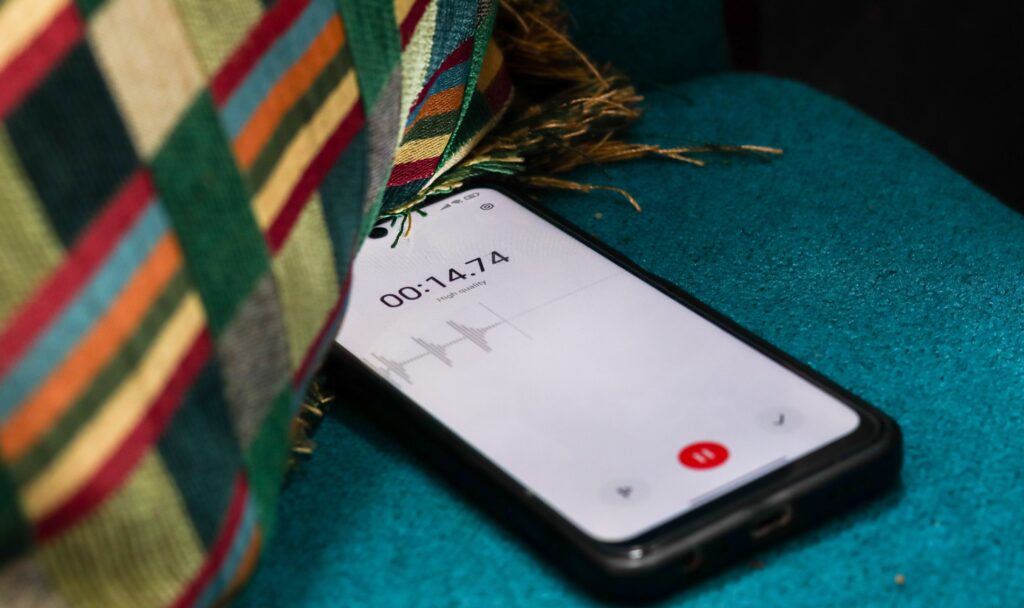
Smartphones, apps and home technology have transformed family litigation. Recording a conversation, tracking someone’s location, or reviewing footage from a doorbell camera is now effortless.
As a result, covert recordings and digital surveillance are no longer unusual-they are becoming routine.
But the reality is uncomfortable: what many parties see as “evidence” often tells the court very little-and may say far more about the person gathering it.
The Rise of DIY Surveillance
Family lawyers are seeing a clear shift. Disputes are no longer confined to statements and witness accounts. They now come with:
- audio recordings
- video clips
- location data
- app histories
- smart home footage
One report suggests that around one in five people going through divorce have used some form of surveillance on a partner.
Technology has made it easy. Human nature has done the rest.
Roger Bescoby, a director at a surveillance company called Conflict International told the independent that he has found devices in “ a cuddly toy, a model boat and even a box of cornflakes on a kitchen shelf.”
The Legal Position: Can you make secret recordings?
In England and Wales, there is generally no prohibition on recording a conversation to which you are a party, even without the knowledge of the other participants. However, the legality of making the recording does not determine whether the court will accept it as evidence.
Family proceedings are governed by the Family Procedure Rules 2010, which give the court wide discretion regarding the admission and weight of evidence.
When considering covert recordings, the court will examine several factors, including:
- the circumstances in which the recording was made
- whether the recording is complete or selective
- whether it has been edited or manipulated
- the context of the conversation
- the potential impact on the welfare of any child involved
Judges are often cautious because recordings often capture only a fragment of a wider interaction, which may create a misleading impression.
Recordings are often:
- partial
- selective
- taken out of context
- influenced by the person making them
A short clip can distort a longer interaction. A recording can be engineered as much as it can be observed.
So even where admissible, its value may be limited.
Secretly Recording Children
Particularly concerning to the courts is the covert recording of children.
Guidance from the Family Justice Council highlights that secretly recording a child may have significant emotional and psychological consequences. Children consulted during the preparation of the guidance described such behaviour as a breach of trust and privacy.
When covert recordings involve children, the court must consider:
- whether the child understood they were being recorded
- whether the child may be placed in a difficult position if the recording is relied upon in proceedings
Under the Children Act 1989, the welfare of the child is the court’s paramount consideration, and evidence obtained in a way that risks harming the child may be treated critically by the court.
In some cases, the act of secretly recording a child has itself been viewed as behaviour contrary to the child’s welfare.
Lawful Does Not Mean Persuasive
There is a persistent misunderstanding in family cases: If I’m allowed to record it, it must help my case. That is not how the court approaches it.
Judges have wide discretion. The real question is not legality, but relevance and proportionality. Evidence that does not assist the court-or that distracts from the real issues-may simply be ignored.
Will It Harm My Case?
What starts as “gathering evidence” can quickly become something else. Courts are increasingly alive to the fact that patterns of monitoring can themselves become relevant conduct. Where digital surveillance is used to intimidate or monitor a former partner, the court will consider whether digital surveillance amounts to harassment, abuse, or an invasion of privacy and therefore be relevant to findings of domestic abuse.
Real-world cases illustrate how easily this escalates:
- A judge condemned a husband who installed a hidden camera in his living room to monitor his wife, describing it as “an act of control”
- Other cases have involved partners secretly installing cameras inside the home to observe behaviour (see: Husband bugged marital home so he could secretly tape his estranged wife and Husband ‘used hidden camera to watch wife and told her he had spiritual powers’)
- In more extreme scenarios, covert surveillance has been linked to financial misconduct and attempts to gain leverage. (See: Wife ‘set up secret cameras inside home to steal husband’s £180million in bitcoin’ while divorcing)
These are not isolated incidents-they reflect a wider shift in how disputes are being conducted.
The line between evidence-gathering and intrusion is thinner than many realise.
Modern surveillance rarely looks like “spying.” It looks ordinary:
- shared apps
- home security systems
- synced devices
Tools such as Find My Friends or footage from devices like Ring Doorbell can build detailed timelines of a person’s movements. But the more detailed the picture, the greater the risk.
What feels like harmless checking can become persistent monitoring. And what is presented as evidence can instead be interpreted as intrusion.
Surveillance to Prove Affairs: Legally Irrelevant, Emotionally Compelling
One of the most common drivers of digital surveillance is suspicion of an affair.
Technology makes it easy:
- location tracking
- doorbell footage
- device access
- pattern analysis
- unauthorised access to email or social media accounts
In some cases, even publicly available tools have exposed relationships-such as reports of google maps inadvertently revealing infidelity.
From a legal perspective, however, this is usually beside the point.
Family courts are not concerned with moral blame. There is, in most cases, no need to prove an affair.
But law and human nature are not the same thing. People want answers. They want confirmation. They want to know if they were lied to. And when the technology exists to find out, many will use it-even where it adds nothing of legal value.
Can I Record Meetings With Professionals?
There is generally no absolute prohibition on recording interactions with professionals (including social workers or Cafcass officers), provided the person making the recording is present in the conversation. However, covert recording of professionals raises a number of practical and ethical issues.
Such recordings can:
- undermine trust between professionals and parents
- complicate the safeguarding process
- disrupt the working relationship necessary for effective assessment
So although it is not automatically unlawful, it is often counterproductive. And in many cases, it weakens rather than strengthens the position of the party relying on it.
Can I Record Court Hearings?
A critical distinction must be drawn between recording conversations and recording court proceedings.
Family hearings, whether conducted in person or remotely, must not be recorded without the express permission of the court. Unauthorised recording may constitute contempt of court and can lead to serious consequences such as:
- Fines – the court can impose a financial penalty
- Imprisonment – in more serious cases, up to 2 years in prison
- Seizure of devices – phones or recording equipment may be confiscated
- Deletion of recordings – the court can order the material to be destroyed
- Restrictions on future participation – for example, limiting how you can attend or take part in hearings
- Costs orders – you may be ordered to pay legal costs incurred as a result of your actions.
What about GDPR?
The use and disclosure of covert recordings and surveillance can raise additional legal issues under the Data Protection Act 2018 and GDPR.
While recordings made for purely personal purposes may fall within the “domestic purposes exemption”, this protection may not apply where recordings are shared more widely or used within formal legal proceedings.
This is particularly sensitive when recordings contain personal data relating to children or professionals involved in safeguarding work.
When the Evidence Becomes the Issue
Introducing covert material into proceedings often creates more problems than it solves.
Courts may require:
- original recordings
- full transcripts
- explanations of how the material was obtained
Entire hearings can be consumed by arguments about the evidence itself.
At that point, the focus has already shifted.
What Are The Risks To Including Secret Recordings?
Covert recordings and surveillance frequently backfire.
They may:
- add little evidential value
- damage credibility
- shift attention onto the conduct of the person gathering them
In some cases, the act of recording becomes more important than what was recorded.
Conclusion
We now live in a world where almost anything can be recorded, tracked or retrieved. But in family proceedings, that does not mean it should be.
The technology is powerful. The temptation to use it is strong. But the court’s approach remains grounded:
Not everything that can be proved is worth proving.
And often, the pursuit of evidence reveals more than the evidence itself.
For an initial FREE consultation on any aspect of family law, call Manders Law on 01245 895 105 or email us here.
Note: this blog is intended to give an overview (rather than comprehensive guidance and advice) on your legal or financial position and is provided for information only. It is not an endorsement of any product or service provider.